Four Shopkeepers and a Trillion Transactions
Notes from Rajasthan, on what measurement misses
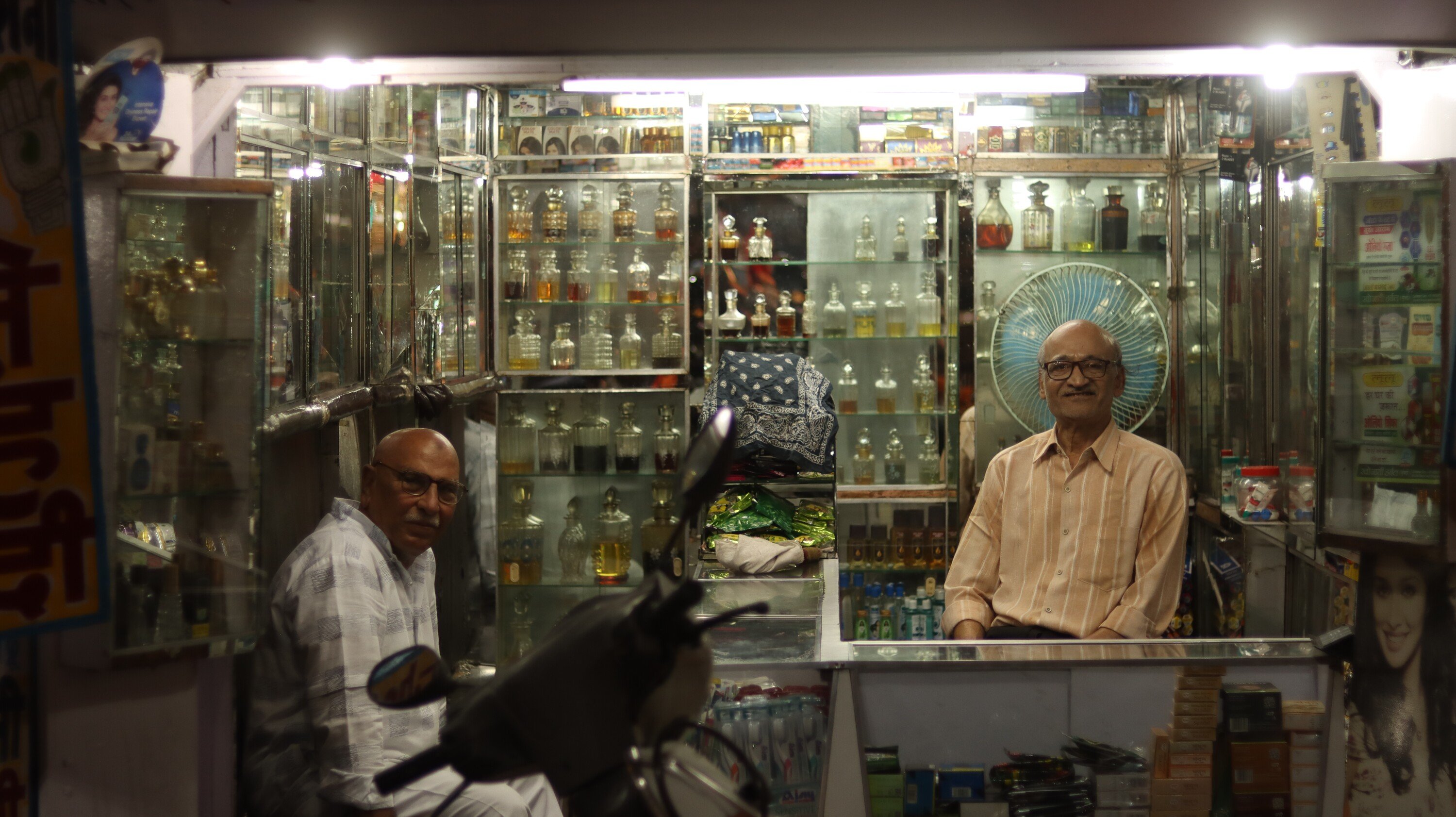
The motorcycle was parked across the entrance to the perfume shop in Hathipol1, and nobody had asked the owner to move it. The blue-bladed fan at the back was switched on when I arrived, stirring the evening air between the rows of glass bottles. The shop smelled of rose and sandalwood and mitti ka ittr2. When I held up my phone to pay, the old uncle smiled and said, “Beta, we accept only cash.”
The uncle chuckled when he said it. The phrase had the ease of something said often, to people like me. The shop had belonged to his grandfather first, who came from Palanpur seeking fortunes under the Maharaja of Mewar; then to his father; now to him. Three generations behind the same counter. The glass bottles along the wall were older than most of the people walking past outside.
There was no resentment in the refusal. It was not a statement about modernity. The uncle had said it the way someone might say the shop closes at six on Fridays. Regulars know. Visitors learn. I paid in cash. He wrapped the small glass vial in old newspaper. A man walked in as I left, nodded at the uncle, and began a conversation that had clearly been going on for thirty years.
India processes more than 700 million UPI3 transactions a day, more than the rest of the world’s real-time payment systems combined. The system has been called the most successful digital payments infrastructure ever built. My friends have told me they cannot remember the last time they used a banknote. None of those transactions came from this shop. In the national data, it is a rounding error. More often it does not appear at all.
A few days later, in Chittorgarh, our tour guide Puneet was walking us up to the fort at two in the afternoon, when the stone is hot enough through a shoe to make you pay attention. He told the story of Rani Padmini — the siege, the jauhar. He paused where the story paused. When I took out cash to pay him at the end, he shook his head.
Sirji, online hi kardo, cash kharach ho jayega.4
The UPI went to an account he had set up specifically so that money could sit somewhere he would not touch. Cash in the pocket vanished by evening; a balance on the app stayed until he needed it. He had inverted the technology into a savings device. The designers had not planned for that.
Indralal makes silver and gold jewellery in Bada Bazaar. Bangles, nose rings, anklets, whatever the wedding season demands. He is old enough that anything requiring a phone gets handled by his son. When I asked him how he took payments, he waved a hand at the QR code stuck above the counter and said, “We have Google Pay,” with the cheerfulness of someone relieved to have an answer. His son had set that up too. Indralal stood at the counter as he had for forty years.
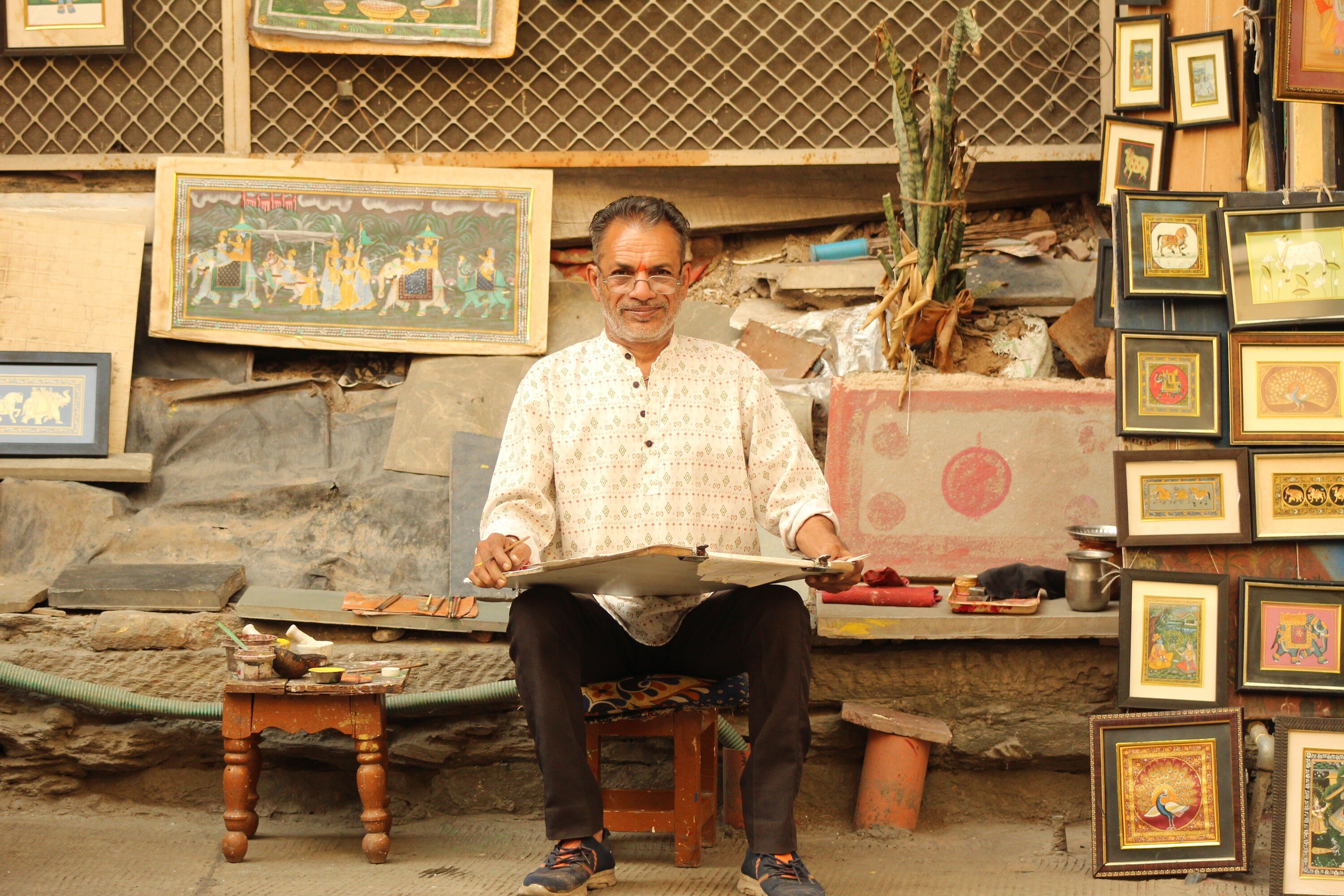
Lalit runs a small gallery, up a staircase precarious enough that I stopped halfway to look at where my feet were going. Portraits of his great-grandfather, his grandfather, and his father look down from the walls. I asked him where his own portrait would go. He smiled before he answered. “There will be none. This business dies with me.” His hands were stained with pigment, and he kept them folded on the table while we spoke. He takes UPI now. He had resisted it for a while; the customers insisted. He adopted because the alternative was losing them. The QR code stayed on his wall. It was not progress. It was not a problem either. It was just there now.
Same country, same technology, same year. Four completely different human experiences. A dataset would record all four as a row with adopted: yes/no. It would capture nothing about why.

Months later, in a different country, the four of them keep returning to me.
They keep returning because the same questions are being asked again, of a different technology, at a much larger scale. The questions about what a new technology means in an actual life, and what the data captures, and what it does not. Frontier labs and the largest companies in the field have begun publishing data on how AI is actually being used. The patterns are already visible. The data sees rich countries more clearly than poor ones. Usage is dominated by a narrow set of tasks, mostly coding and writing. Experienced users get measurably better outcomes than newcomers. The work is real. It is more than was available for any previous technology at this stage of its arrival.
The perfumer was not refusing UPI. The shop had its own coherence, and there was nowhere for a QR code to sit in it. There is work like that everywhere — work where hands and attention and years of practice matter, where a tool from outside has nothing to attach to. These are not refusers. The data does not record absences like this. It does not see them at all.
Puneet’s savings trick was not what UPI was built for. He had told me cash in his pocket vanished by evening. The account was where he kept it from himself. The same is happening now, with people fitting AI around the rhythms of their own days. Most of these inversions never appear in any account of what this superior intelligence is doing to the economy.
Indralal’s son had set up the QR code. In the data, Indralal is the adopter. The firm that subscribes, the school that rolls out the tools, the parent whose child sets up the system at home. The data records the adopter, not who chose.
Lalit had not wanted UPI. The customers insisted. He adopted because the alternative was losing them. This is the most common adoption pattern: the yes given because the no has been made too expensive. The AI tool in the workflow, the system the colleague has begun using, the resume that has to match what the polished ones look like. Each yes was a yes the user could not afford to refuse.
The framework sees one kind of adoption. The other kinds keep happening anyway.
What would change if we treated the people inside the system not as the subjects of measurement, but as people who have already learned something the rest of us have not?
The frameworks for measuring what AI is doing to the economy are still being built. What they end up seeing is what we will treat as real, for a long time. The shape they take in the next few years matters more than it will once they harden. The four people I met in Rajasthan were not researchers. They were paying attention to what was happening in their own lives, and what they knew was real. The people whose lives are reshaped by a technology learn things about it that the people measuring it, however careful, never quite learn. The questions they were carrying, in the small ways their lives carried them, are the same questions we are carrying now.
What is gained when we move forward? And what, irreversibly, is left behind?
Photos here are by me and Shreya, who’ll take fifty frames of the same thing until one of them is right. Thank you, S.
Footnotes